
 Available in US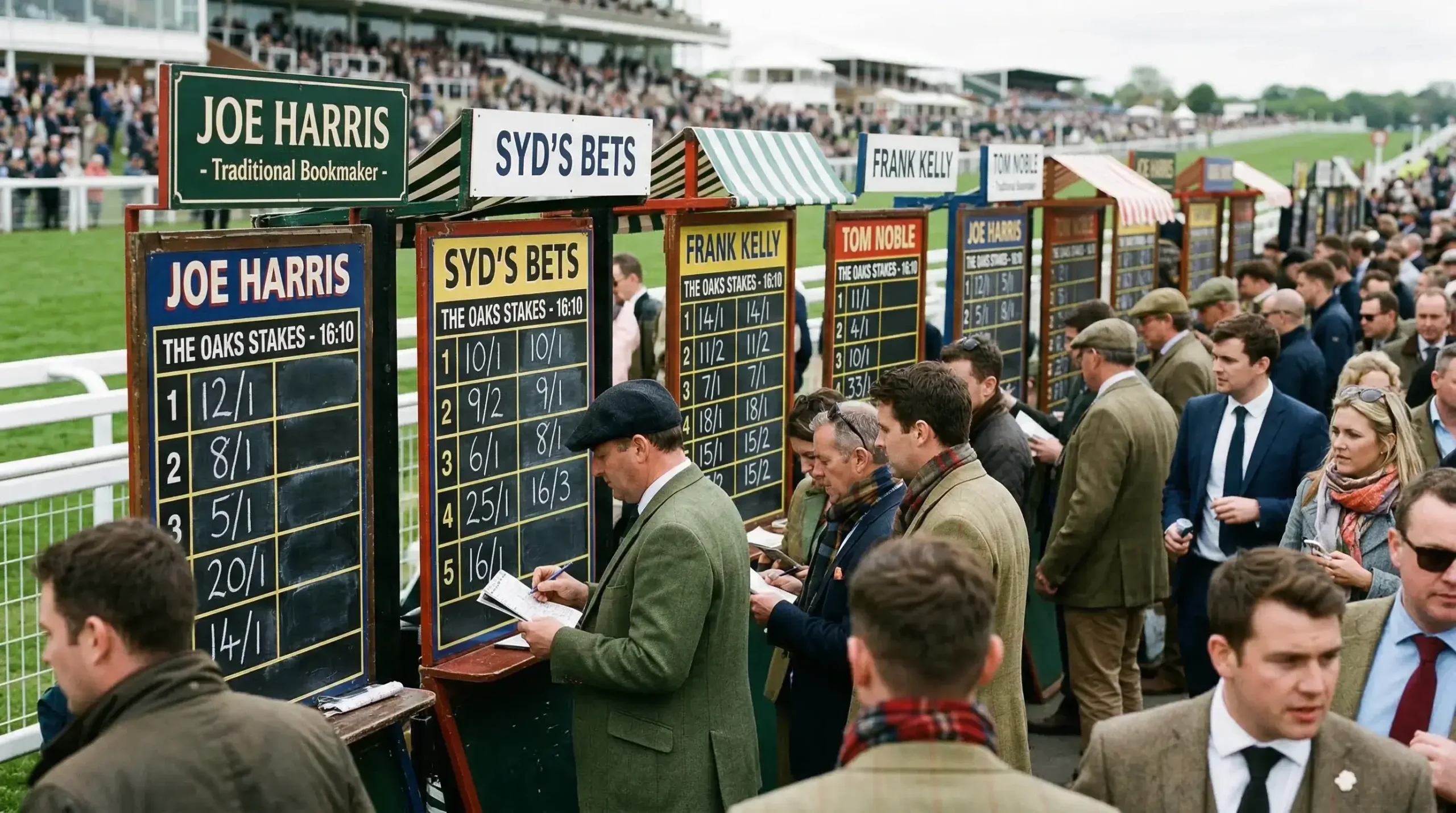
Not all ante-post odds are created equal. The same horse, in the same race, on the same afternoon, can be priced at 10/1 with one bookmaker and 8/1 with another. That difference — two points of odds on an identical outcome — is the reason comparing ante-post horse racing odds across operators is not optional for anyone who takes early betting seriously. The punter who consistently finds the sharper price across a season’s worth of ante-post bets will generate a measurably better return than the one who takes whatever their default bookmaker offers.
This article explains the mechanics behind ante-post odds — implied probability, overround, and the structural reasons why prices differ between firms. It then examines how to read line movement: the signals embedded in a price that steams or drifts, and what those movements tell you about the information the market has absorbed. The tools are straightforward. The discipline to use them consistently is what separates informed ante-post bettors from the rest.
Implied Probability and Overround in Ante-Post Markets
Every set of odds implies a probability. A horse quoted at 4/1 has an implied probability of 20 per cent — the market is saying, in effect, that this horse has a one-in-five chance of winning. A horse at 10/1 has an implied probability of just under 9.1 per cent. Converting odds to implied probabilities is the first step in assessing whether a price offers value, because it translates the bookmaker’s opinion into a number you can compare against your own assessment.
The formula is simple: implied probability equals 1 divided by the decimal odds. For fractional odds, convert first — 4/1 becomes 5.0 in decimal form, so 1 divided by 5.0 equals 0.20, or 20 per cent. The smaller the implied probability, the longer the odds and the more the bookmaker believes the outcome is unlikely. The key question for the punter is whether the implied probability understates or overstates the horse’s actual chance.
In any ante-post market, the sum of all implied probabilities will exceed 100 per cent. That excess is the overround — the bookmaker’s built-in margin. A market with total implied probabilities summing to 120 per cent has a 20 per cent overround. In day-of-race markets, overrounds on UK horse racing typically sit between 110 and 125 per cent. In ante-post markets, overrounds tend to be wider — often 130 per cent or more — because the bookmaker is compensating for the additional uncertainty and the longer settlement horizon.
Average turnover per race in the UK dropped by 8 per cent in the 2024–25 period, with figures also running 15 per cent below 2022–23 and 19 per cent below 2021–22, according to data from the Horserace Betting Levy Board. That declining turnover affects ante-post overrounds in a specific way: when less money flows into a market, bookmakers widen their margins to protect against the increased risk of unbalanced books. Lower liquidity means fatter overrounds, which means the punter needs to be more selective about which prices to accept.
Understanding the overround lets you compare bookmakers on a structural level. A firm offering 125 per cent overround on a Cheltenham ante-post market is giving better prices, on average, than one at 140 per cent. The sharper price is not always on the horse you want — the overround is spread across the entire field — but a consistently lower-overround bookmaker will offer better value across a season of ante-post bets.
Why Ante-Post Odds Vary Between Bookmakers
Ante-post odds vary between bookmakers for reasons that go beyond simple competition. Each firm has its own trading model, its own risk appetite, and its own customer base — and all three influence the prices they offer.
The first factor is the bookmaker’s ante-post liability. When a firm takes a large ante-post bet on a horse, it creates a liability that sits on the book for weeks or months. The firm must either hedge that liability — typically by laying off on an exchange — or carry it and hope the horse loses. Firms with conservative risk management will adjust their prices after absorbing large bets, shortening the horse that attracted the money and drifting others. More aggressive operators may hold their prices for longer, betting against the punter. The result is that the same horse can trade at different prices across firms at the same moment, depending on who has taken big bets and who has not.
The second factor is pricing philosophy. Some bookmakers — particularly those with roots in on-course betting — pride themselves on offering competitive early prices to attract ante-post custom. Others operate on wider margins and rely on promotional offers to compensate. Betting exchanges occupy a different space entirely: prices on Betfair, Smarkets, and Betdaq are set by the weight of money from other punters, not by a trading team. Exchange prices typically carry the lowest effective overround but are limited by liquidity — you cannot always get matched at the price shown, particularly in ante-post markets months before a race.
Favourites across UK horse racing win approximately 30 to 35 per cent of races, according to Honest Betting Reviews. That baseline matters for ante-post comparison because it tells you how often the market’s top-priced selection is right. If bookmakers differ on who the favourite is — or price the favourite at different odds — the one offering a longer price on the same horse is effectively disagreeing with the consensus. That disagreement is either a better price for you or a sign that the bookmaker knows something the rest of the market does not.
The practical approach to finding the sharper price is straightforward: check at least three or four firms before placing any ante-post bet. Odds comparison sites automate this process for day-of-race betting, but ante-post markets are less consistently covered. Manual comparison — opening three or four bookmaker apps and noting the price on your selection — takes two minutes and can add one, two, or three points of odds to every bet you place over a season. Compounded across 20 or 30 ante-post positions, that marginal improvement is worth real money.
Reading Line Movement — What Steaming and Drifting Reveal
Ante-post prices are not static. They move — sometimes gradually, sometimes sharply — and those movements carry information. Learning to read line movement is one of the most useful analytical skills in ante-post betting, because the market often knows things before the racing press reports them.
Steaming refers to a horse whose price shortens rapidly across multiple bookmakers. A horse that opens the week at 12/1 and is 8/1 by Friday has steamed in. The movement can be triggered by a trial-race result, a positive training report, a jockey booking, or — less visibly — significant money from well-informed sources landing on the horse across several firms simultaneously. When a horse steams without an obvious public catalyst, it is often a sign that connected money — from owners, stable insiders, or professional bettors — is behind the move. Following that money is not guaranteed to be profitable, but ignoring it means ignoring a data point the market is offering you.
Drifting is the opposite: a horse whose price lengthens over time. A drift from 6/1 to 10/1 over three weeks signals that money is leaving the selection or, more precisely, that new information is causing the market to reassess the horse’s chance downward. Drifts can be caused by setback rumours, rival improvements, or simply the absence of supportive money. A sourceless drift — where no news explains the move — deserves particular attention, because it suggests that the market has absorbed negative information that has not yet reached public channels.
The distinction between meaningful movement and noise matters. A one-point shift in a single bookmaker — from 10/1 to 9/1 or 10/1 to 11/1 — may be nothing more than that firm rebalancing its book after taking a bet. A sustained move in the same direction across three or four operators over several days is a signal worth acting on. The sharper price in ante-post betting is not always the longest one; it is the one that correctly anticipates where the market is heading.
Tracking line movement does not require expensive tools. Most major bookmakers display ante-post price histories on their sites, and odds comparison platforms record changes over time. The discipline is to check prices on a regular schedule — weekly for long-range markets, daily in the final weeks before a festival — and to note patterns rather than reacting to individual moves. Over a season, the punter who reads line movement consistently will spot both opportunities and warnings that the casual bettor misses entirely.
Ante-Post Odds Comparison — More on this topic at ascot betting offers.
See also Affordability Checks & Ante-Post Betting.
