
 Available in US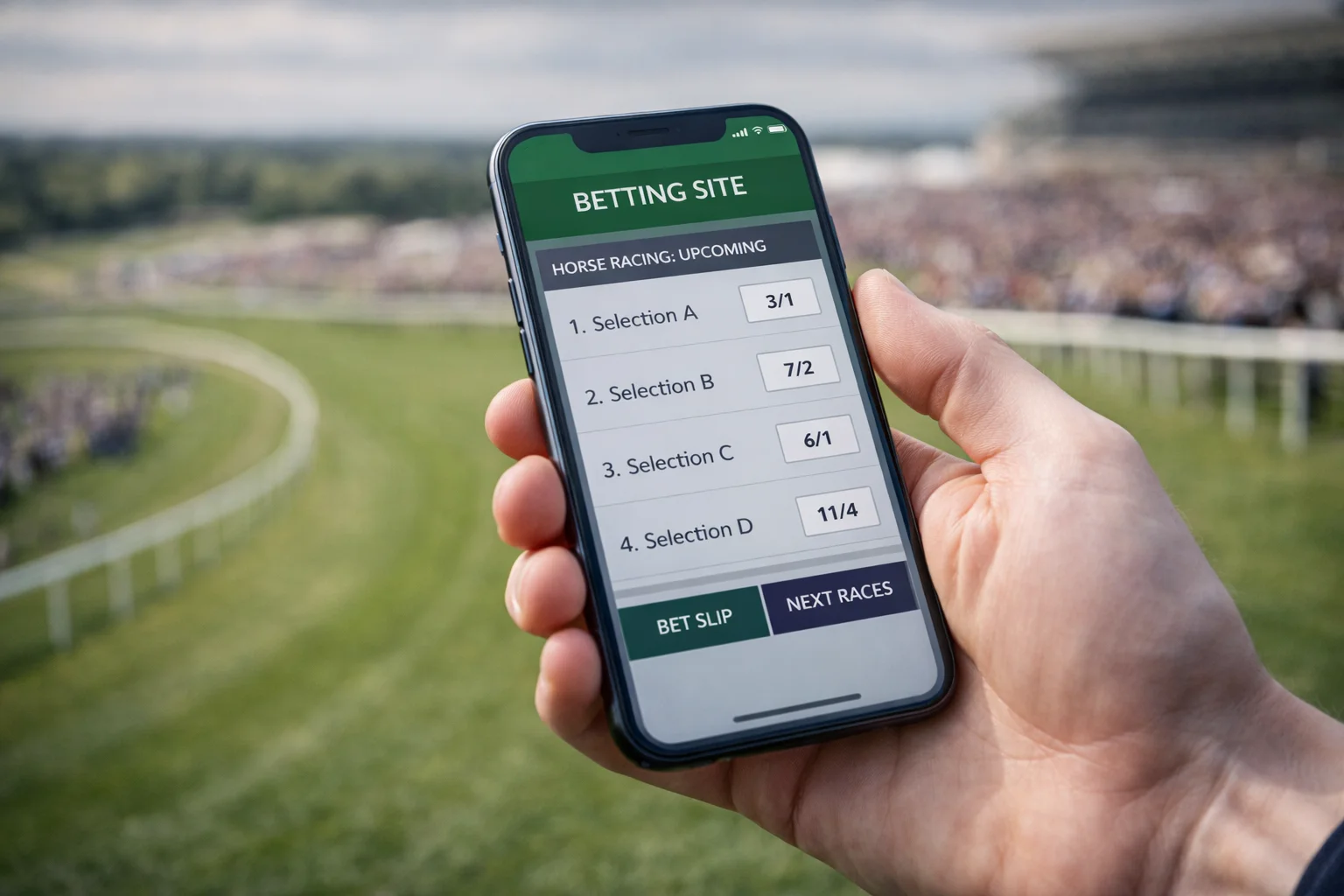
The bookmaker you use for ante-post betting matters more than the bookmaker you use for a Saturday afternoon accumulator. Ante-post bets sit on the book for weeks or months, they carry non-runner risk, and they depend on features — NRNB, cash out, early markets, competitive pricing — that not every ante-post betting site provides equally. Choosing the right platform for early horse racing odds is a structural decision that affects every bet you place.
This article outlines the criteria that separate a strong ante-post bookmaker from an adequate one, examines the mobile experience that now dominates how punters interact with ante-post markets, and explains why sticking to licensed UK operators is not just a regulatory preference but a practical protection for your stakes. No specific firms are recommended — the criteria here are designed to help you evaluate any bookmaker against the features that matter for ante-post betting.
Six Criteria That Matter for Ante-Post Bookmakers
Six features distinguish a strong ante-post bookmaker from one that merely offers the service.
The first is range of early markets. Not all bookmakers open ante-post markets at the same time or for the same races. Some firms price Cheltenham Festival markets six months before the meeting; others wait until January. Some offer ante-post on Royal Ascot, the Ebor, and Glorious Goodwood handicaps; others restrict early pricing to Cheltenham and the Grand National. A bookmaker with broader market coverage gives you more opportunities to find value early in the cycle.
The second is Non-Runner No Bet availability. NRNB is the most important protective feature in ante-post betting, and its availability varies significantly. The criteria to assess are which races carry NRNB, when it activates, and whether it applies to each-way bets as well as win-only. A firm that activates NRNB at the 48-hour declaration stage for all Cheltenham races offers more protection than one that restricts it to selected events.
The third is cash-out functionality. The ability to close an ante-post position before race day — locking in a profit or cutting a loss — is valuable, but cash-out quality differs. Some firms offer full cash-out on all ante-post bets; others restrict it to certain markets. The margin embedded in the cash-out price also varies. A firm that consistently offers cash-out values close to the theoretical fair price is more useful than one that takes a large cut.
The fourth is pricing competitiveness. Over a season, consistently taking the best available price on your ante-post selections — even by a point or two — compounds into a meaningful difference in returns. A bookmaker that routinely prices at or near the market best is structurally better for ante-post punters than one that relies on promotions to offset wider margins.
The fifth is ante-post terms transparency. Settlement rules for non-runners, postponed races, voided events, and multiples should be clearly stated and easy to find. A bookmaker whose terms are buried in legal footnotes or phrased ambiguously is one where disputes are more likely — and in ante-post betting, where a single non-runner can void a bet placed months earlier, clarity of terms is essential.
The sixth is account management — specifically, the firm’s approach to successful bettors. Some bookmakers restrict or close accounts that show consistent profitability. For ante-post punters, who may show concentrated winning periods around festivals, account restrictions are a genuine risk. A bookmaker with a reputation for tolerating winning accounts is the right platform for serious ante-post activity, even if its pricing is marginally less competitive on any given market.
Mobile Betting and the Ante-Post Punter
The ante-post betting experience is now overwhelmingly mobile. Over 80 per cent of bets placed during the 2024 Cheltenham Festival came via mobile devices, according to Receptional. That figure encompasses day-of-race and ante-post bets alike, and it reflects a broader reality: the app on your phone is where most ante-post activity now takes place.
For ante-post purposes, a mobile app needs to do more than accept bets. It needs to provide access to early markets without requiring you to navigate through layers of menus. It needs to display NRNB status clearly on the bet slip — not buried in terms and conditions — so you know whether your stake is protected before you confirm. It needs to offer cash-out functionality in real time, allowing you to close a position when a trial result or training report changes the picture. And it needs push notifications for price movements on horses you have bookmarked or backed, because ante-post prices can shift while you are not actively looking at the market.
Not all apps deliver equally on these points. Some are designed primarily for day-of-race betting and treat ante-post as a secondary feature, with markets tucked away under a specials tab. Others — particularly those from operators with strong racing heritage — give ante-post markets prominent placement and build the interface around early betting activity. The right platform is one that makes ante-post betting as smooth as placing a Saturday single, not one that treats it as an afterthought.
Speed also matters in moments of market movement. When a trial race finishes and the ante-post market reprices, the window to grab the best odds can be brief — minutes, not hours. A sluggish app, one that loads markets slowly or delays bet confirmation, can cost you points of value at exactly the moments when value is most available. Testing your bookmaker’s app under pressure — not just in quiet moments — is part of choosing the right platform for ante-post activity.
Why Sticking to Licensed UK Operators Protects Your Ante-Post Bets
The regulatory landscape for UK betting has tightened significantly in recent years, and for ante-post bettors the distinction between licensed and unlicensed operators is not academic — it has direct implications for the security of your stake.
All bookmakers offering betting to UK customers must hold a licence from the Gambling Commission. That licence requires the operator to segregate customer funds, comply with dispute resolution procedures, and adhere to advertising standards. When you place an ante-post bet with a licensed UK operator, your stake is held in a regulated environment for the duration of the bet — which, in ante-post terms, can be several months. If the operator encounters financial difficulty, customer funds are protected to a degree that does not apply on unlicensed platforms.
The migration of punters to unregulated sites is a documented trend. According to a Racing Post survey of 10,000 bettors, one in three high-staking punters — those wagering £1,000 or more — admitted to using an unregulated betting site in the previous 12 months, as reported by Racing Post. That migration is driven partly by affordability checks and stake restrictions on regulated sites, which frustrate larger bettors. But the trade-off is stark: unregulated operators offer no fund protection, no enforceable terms, and no recourse if a bet is settled unfairly or a withdrawal is blocked.
For ante-post betting specifically, the risk is compounded by time. A day-of-race bet on an unlicensed site is settled within hours — the exposure to operator failure is brief. An ante-post bet placed in October for a March race sits on an unlicensed book for five months, during which the operator could cease trading, change its terms, or simply refuse to pay a winning bet. The appeal of higher limits or fewer checks does not offset the risk of placing a long-duration bet with an operator that has no regulatory accountability.
The right platform for ante-post betting is, without exception, a licensed one. The features described in this article — NRNB, cash out, transparent terms, competitive pricing — only have value if the operator behind them is regulated, solvent, and accountable. That is the foundation on which everything else rests.
Ante-Post Betting Sites — More on this topic at ascot betting offers.
See also Ante-Post Odds Comparison.
